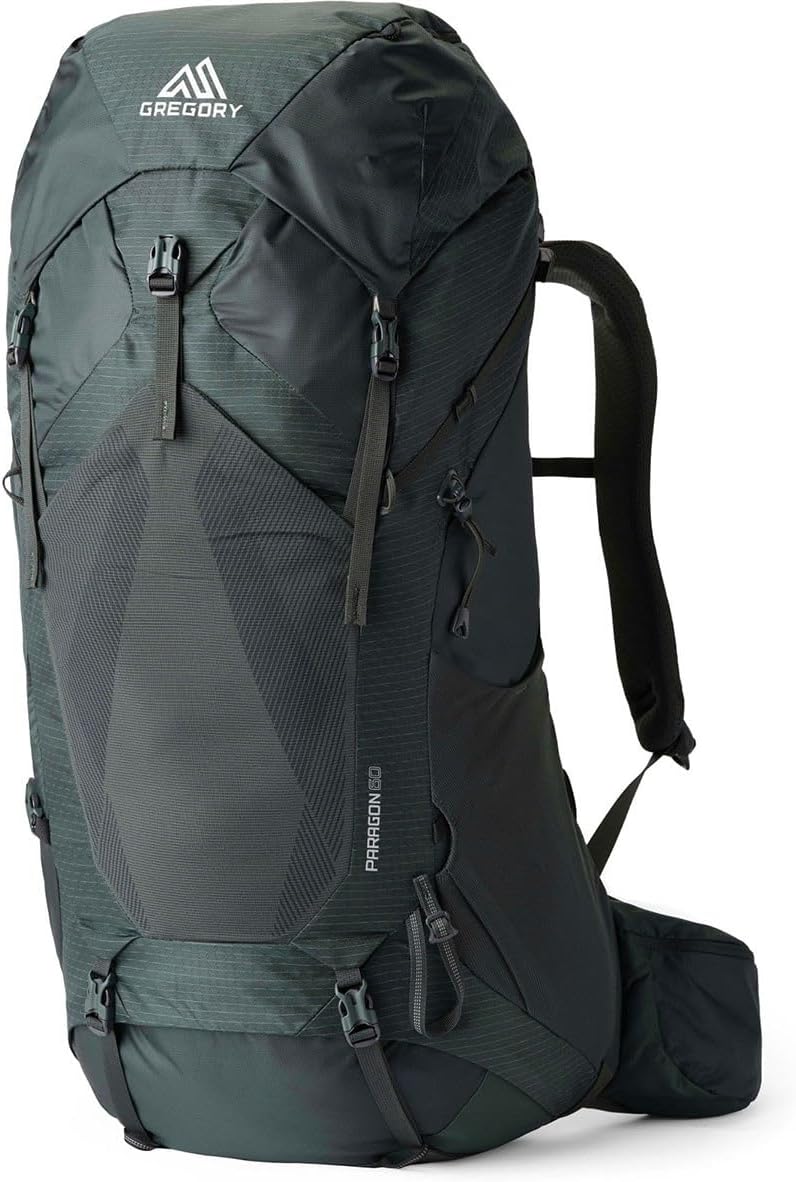
The Gregory Paragon 60 is the value comfort pick, and CleverHiker's editor's-choice award winner for the most comfortable pack in their lineup. It pairs a plush, highly adjustable suspension with a sensible 3 lb 8 oz weight and a 50 lb max load, making it a do-everything 60L pack that carries heavy loads comfortably without the bulk of a true expedition pack. It is not as airy as the Osprey Atmos and not ultralight, but its blend of comfort, capacity, weight, and price is hard to beat.
Full review
Comfort and Adjustability
Comfort is the Paragon 60's calling card, and the praise is near-universal. CleverHiker gave it their editor's choice award for being the most comfortable pack in their lineup, the same lineup that includes the Osprey Atmos, which is high praise. The suspension pairs well-padded shoulder straps and a generously cushioned hip belt with an adjustable torso, so it can be tuned precisely to your back.
OutdoorGearLab, which scores it 80 out of 100, calls it a great pack particularly for its adjustability and overall comfort, citing the well-padded shoulder straps and hip belt cushioning and the adjustable torso. SectionHiker agreed after testing, noting that the hip belt is wonderfully comfortable and the shoulder straps continued the good news. For a backpacker who wants plush carry without committing to the heaviest packs, the Paragon hits a sweet spot.
The adjustability is more than a checkbox feature. The torso length tunes over a wide range without tools, so a single pack can fit hikers of quite different proportions, and the auto-rotating hip belt pivots with your stride to keep the load tracking with your body rather than fighting it. That combination of a tunable fit and a moving hip belt is a big part of why so many testers single out the Paragon's comfort even against pricier, heavier packs.
Load Carrying and Capacity
The Paragon 60 is rated to a 50-pound max load and genuinely earns it. AdventureAlan's five-day Grand Canyon test and other reviews found it handles 30 pounds with ease and remains comfortable into the 35-to-40-pound range, which covers the vast majority of multi-day backpacking scenarios including water-heavy desert carries and longer food loads. A five-day Grand Canyon trip is a demanding proving ground, with heavy water carries and big elevation swings, and the Paragon coming through it comfortably speaks to how well its suspension manages real loads.
Sixty liters is a versatile volume, big enough for a comfortable multi-day kit with room for a bear canister or extra layers, yet not so large that the pack becomes unwieldy. Gregory's suspension keeps that capacity feeling controlled rather than sloppy, transferring weight to the hips so your shoulders are not doing the work. It is the kind of pack you can use for a wide range of trips rather than a single specialized mission.
That 50-pound rating also gives the Paragon real headroom that the lighter packs on this list lack. Where the Osprey Exos 58 and Granite Gear Crown3 60 start to sag past 35 pounds, the Paragon stays composed deep into the 40s, which matters for desert trips with heavy water carries, longer food loads, or shoulder-season kits with extra insulation. You are far less likely to find yourself at the edge of the pack's comfortable capacity, which is a quiet but real advantage on demanding trips.
Organization and Features
Gregory designed the Paragon 60 to be easy to live with on the trail. It offers side-zip access to the main compartment so you can reach gear without unpacking from the top, an included raincover, hydration reservoir sleeve, hipbelt pockets, and dual front storage. New for the latest version is a stretch-mesh pocket on the left shoulder strap sized to hold a Garmin InReach Mini or Messenger, a thoughtful nod to backcountry safety.
These touches add up to a pack that keeps you organized on longer trips, with quick access to the things you reach for often. Switchback Travel summed up the overall package as a very well-balanced design at a great price, which captures why the Paragon has become such a frequent recommendation: it does almost everything well without a glaring weakness.
The side-zip access in particular is the kind of feature you appreciate more the longer your trip. Instead of digging down through the top of a fully packed bag to reach something buried at the bottom, you unzip the side and grab it, a small convenience that saves repeated unpacking and repacking at trailside breaks. For a pack at this price, the breadth of thoughtful organization is a genuine value, matching features usually reserved for more expensive packs.
Where It Falls Short
The Paragon 60 is light for a comfort pack but it is not ultralight. At around 3 pounds 8 ounces it weighs more than dedicated lightweight packs like the Osprey Exos 58 or Granite Gear Crown3 60, so gram-counters chasing the lowest base weight will find it heavier than they want. The adjustable suspension that makes it so comfortable also adds a little complexity and a few ounces.
Ventilation is good but not class-leading. Unlike Osprey's fully suspended Anti-Gravity mesh, the Paragon's backpanel sits closer to your body, so it does not breathe quite as freely in extreme heat. And like any 60L pack, its generous volume can tempt you into overpacking on shorter trips. None of these are serious flaws, they are the natural trade-offs of a comfortable, do-everything pack.
The adjustable suspension that makes the Paragon so accommodating also adds a little mechanical complexity and a few ounces compared with a fixed-frame pack. In practice the adjustment system is reliable and easy to use, but it is one more thing than a simpler pack has, and it is part of why the Paragon weighs a touch more than a stripped-down design of the same volume. For most buyers that is a trade well worth making for the fit benefits, but ounce-counters will notice it.
How It Compares to Alternatives
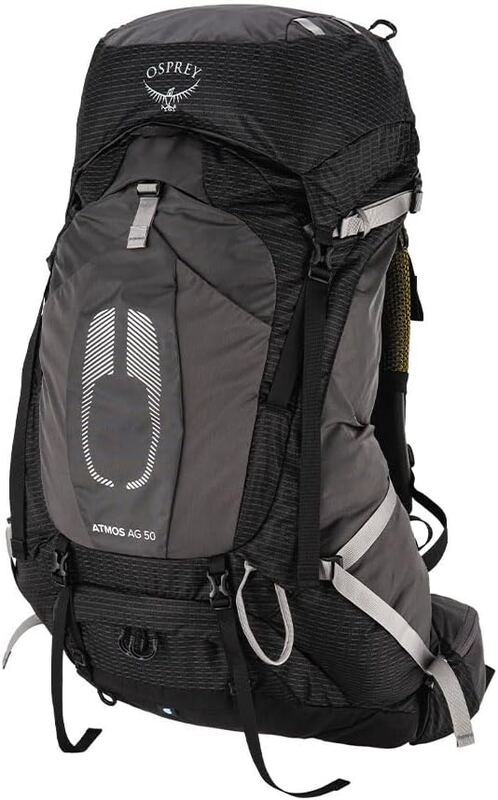
The Paragon 60's most direct rival is the Osprey Atmos AG 50. The two are the comfort leaders of this list, but they differ in emphasis: the Atmos ventilates better thanks to its floating mesh, while the Paragon is lighter, often cheaper, and carries a slightly higher rated load. Choosing between them often comes down to whether back ventilation or lower weight matters more to you.
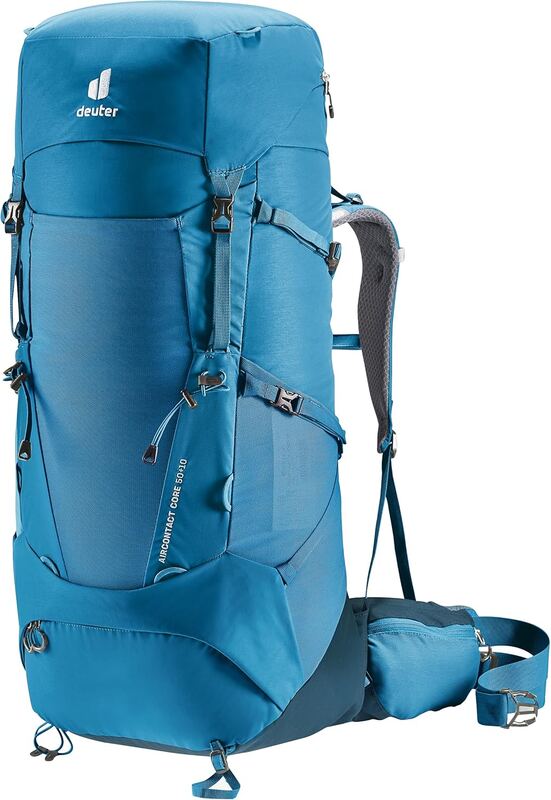
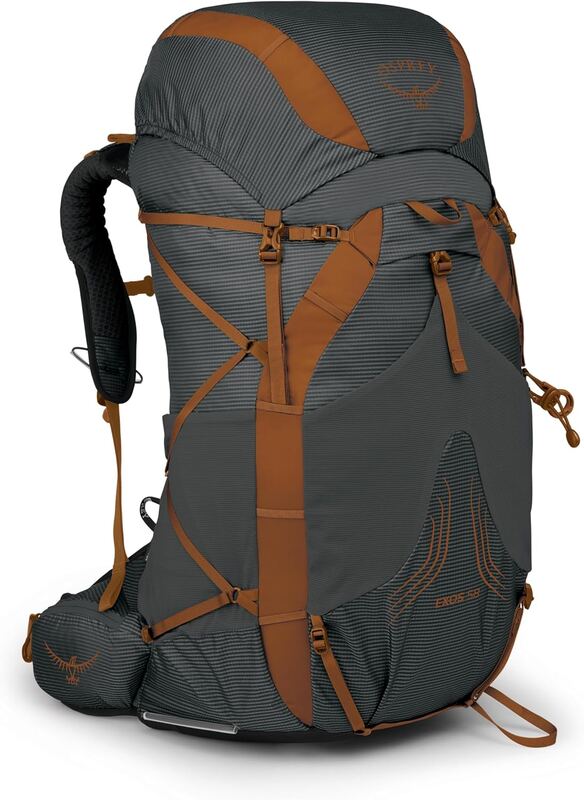
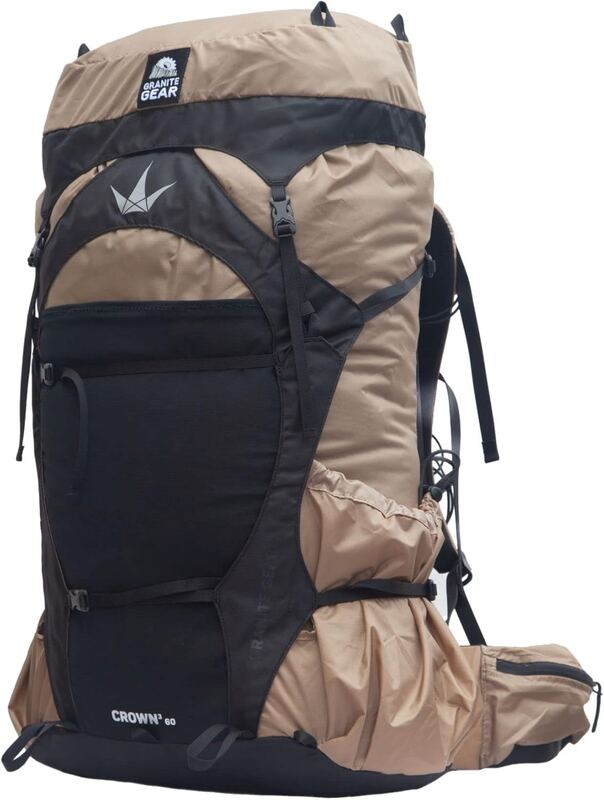
Against the ultralight Osprey Exos 58 and Granite Gear Crown3 60, the Paragon is heavier but far more supportive under heavy loads, and against the gear-hauling Deuter Aircontact Core 50+10 it is lighter and more nimble while giving up some outright volume. It is the well-rounded middle ground, which is exactly why it earns the number-two spot and a strong value recommendation.
Who It's Best For
Choose the Gregory Paragon 60 if you want plush, adjustable comfort and strong load support in a versatile 60L pack at a reasonable weight and a great price. It is ideal for backpackers who do a range of trips, from weekends to weeklong routes, and want one pack that handles heavy loads comfortably without the bulk of an expedition pack.
Look elsewhere if you want the best back ventilation (the Osprey Atmos AG 50), the lowest possible weight (the Osprey Exos 58 or Granite Gear Crown3 60), or maximum gear-hauling volume for long expedition trips (the Deuter Aircontact Core 50+10). For most comfort-minded backpackers shopping on value, though, the Paragon 60 is one of the smartest buys in the category.
What ultimately earns the Paragon its high ranking is the absence of weak spots. Reviewers reach for the word balanced again and again because there is no single area where it clearly disappoints, the comfort is excellent, the load support is strong, the organization is smart, the weight is reasonable, and the price is fair. For a backpacker who wants one pack that does it all well rather than a specialist that excels at one thing, that all-around competence is exactly the right recipe.
Strengths
- +Exceptionally comfortable, highly adjustable suspension that CleverHiker named editor's choice
- +Carries 35-50 lb loads well thanks to well-padded straps and a supportive hip belt
- +Lighter than other comfort packs at around 3 lb 8 oz for 60L of capacity
- +Smart organization including side-zip access and a dedicated InReach shoulder pocket
- +Excellent value and balance, praised by Switchback Travel as well-balanced at a great price
Watch-outs
- −Heavier than dedicated ultralight packs despite being light for its comfort class
- −Not as well-ventilated as Osprey's suspended-mesh Anti-Gravity design
- −Adjustable suspension adds some complexity and a few ounces
- −60L can encourage overpacking on shorter trips
How it compares
The value comfort counterpart to the Osprey Atmos AG 50: nearly as plush but lighter and often cheaper, though it does not ventilate as well as the Atmos AG 50. It is heavier and more supportive than the ultralight Osprey Exos 58 and Granite Gear Crown3 60, and it carries heavier loads more comfortably than either, while weighing less than the gear-hauling Deuter Aircontact Core 50+10.
Who this is for
At a glance: Backpackers who want plush, adjustable comfort and strong load support in a 60L pack at a reasonable weight and price, without going full expedition or full ultralight.
Why you’d buy the Gregory Paragon 60
- Exceptionally comfortable, highly adjustable suspension that CleverHiker named editor's choice.
- Carries 35-50 lb loads well thanks to well-padded straps and a supportive hip belt.
- Lighter than other comfort packs at around 3 lb 8 oz for 60L of capacity.
Why you’d skip it
- Heavier than dedicated ultralight packs despite being light for its comfort class.
- Not as well-ventilated as Osprey's suspended-mesh Anti-Gravity design.
- Adjustable suspension adds some complexity and a few ounces.
Rating sources
“earned CleverHiker's editor's choice award for being the most comfortable pack in their lineup”
“a great pack particularly for its adjustability and overall comfort, with well-padded shoulder straps and hip belt cushioning and an adjustable torso”
“The hip belt is wonderfully comfortable, and the shoulder straps continued the good news.”
Our 4.6 score is the average of these published ratings. Ratings marked * were derived from the reviewer’s written analysis or video transcript — the publisher didn’t print an explicit numeric score, so we inferred one from their own words. Click through to verify. More about methodology.