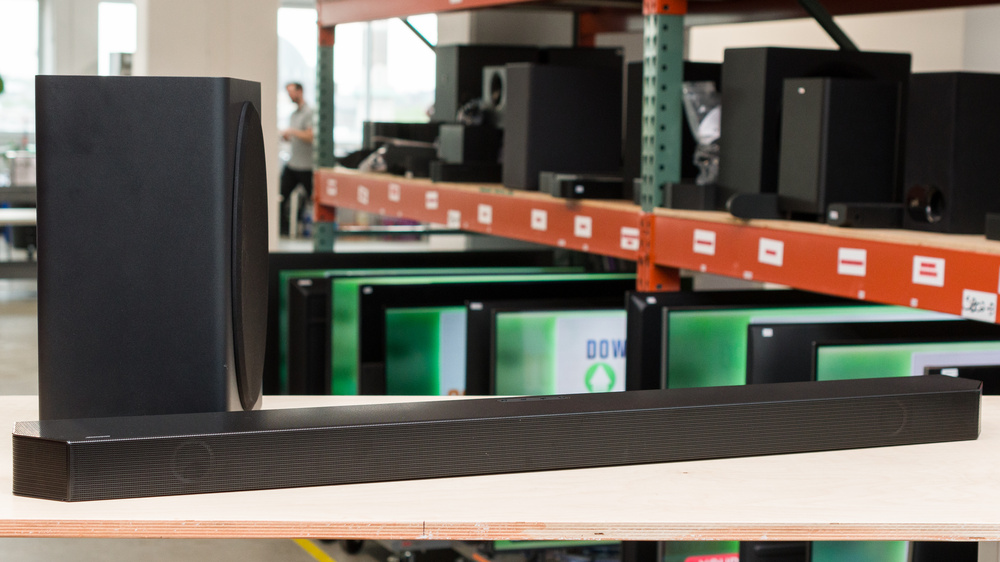
The Samsung HW-Q800D is the most complete Dolby Atmos package you can get comfortably under $1,000. Its 5.1.2 layout, 360W output and included wireless subwoofer deliver spacious, punchy, room-filling sound with convincing overhead effects from real up-firing drivers. The main caveat is a treble that can sound thin and edgy when pushed, but for most living rooms it is the standout mid-range Atmos bar.
Full review
360 watts across 11 speakers with an included sub
Reviewers consistently single out the HW-Q800D's raw output. TechRadar measured a total power of 360W across its 11 speakers and noted that "you really feel that power at all times, whether watching movies or even just listening to music," with the included subwoofer "providing some serious low-end boom." That muscle is what separates this bar from the compact all-in-one options in this guide: explosions land with physical weight, and music gets a foundation most single-cabinet soundbars simply can't produce.
With native Dolby Atmos content fed over HDMI eARC, T3 found the presentation "spacious, direct and – as long as you've trimmed the output of the subwoofer effectively – quite impressively punchy." The up-firing drivers create a believable sense of height during overhead-heavy scenes, and Samsung's SpaceFit Sound calibration adjusts the output to your room on setup, which helps the bar sound consistent whether it sits in a cabinet or on an open shelf.
Treble turns hard and edgy at high volume
The HW-Q800D's strongest trait is bass control. T3 praised how "the subwoofer controls the low-frequency stuff with real authority – the 'start' and 'stop' of bass sounds is properly observed," which is exactly what you want for both action soundtracks and music. Dialogue sits clearly in the mix once you balance the subwoofer level, and the wide front soundstage fills medium-sized rooms without sounding boxy.
Where it stumbles is the top end. T3 flagged that "it's only at the top of the frequency range that the HW-Q800D is less than entirely assured," describing a "lack of substance to the treble sounds,". In practice that means bright, treble-forward mixes can sound a touch thin or fatiguing if you run the bar loud, though it rarely intrudes at normal listening levels.
Extra HDMI input lets other sources pass through
The package includes the main bar and a substantial wireless subwoofer, the latter pairing automatically out of the box. The bar itself is understated and low-profile enough to sit in front of most TVs without blocking the screen. Connectivity is generous for the price: HDMI eARC plus an additional HDMI input for passthrough, optical, Bluetooth and Wi-Fi, so it slots into nearly any existing setup.
TechRadar's reviewer ran it in a small-to-medium room with the subwoofer beside the TV unit, a placement that suits most living rooms, and noted the bar's eleven drivers and 360W of output never felt strained at that scale. The wireless sub is sizeable but not unwieldy, and because it connects automatically there's no fiddly pairing routine. Overall fit and finish are typical premium-Samsung: matte top grille, clean lines and a small front display for status and input.
Q-Symphony only works with a Samsung TV
Setup runs through the Samsung SmartThings app, which TechRadar used to "alter settings and play music over Bluetooth" during testing. The standout software feature is Q-Symphony, which lets the bar play in concert with a compatible Samsung TV's own speakers rather than muting them. That feature, along with the most seamless control integration, is reserved for owners of recent Samsung sets, so buyers with other TV brands lose a little of the ecosystem polish even though core performance is unaffected.
SpaceFit Sound runs an automatic room calibration that measures reflections and tailors the output to your space, which helps the bar sound consistent in a cabinet or on an open shelf. The app also exposes EQ and a crucial subwoofer-level control – reviewers repeatedly recommend trimming the sub a few notches so it underpins rather than overwhelms dialogue. None of this requires technical know-how, and once dialed in the settings persist across inputs.
Skips DTS-X format and the sub ships too hot
Beyond the occasionally edgy treble, the HW-Q800D leaves out DTS:X, supporting Dolby Atmos and DTS but not the object-based DTS:X format some Blu-rays use. It also leans on its Samsung-TV synergy: pair it with a non-Samsung TV and you keep the sound but lose Q-Symphony and a chunk of the unified-control convenience. Finally, the subwoofer level can be trimmed in the app if the low end swamps dialogue.
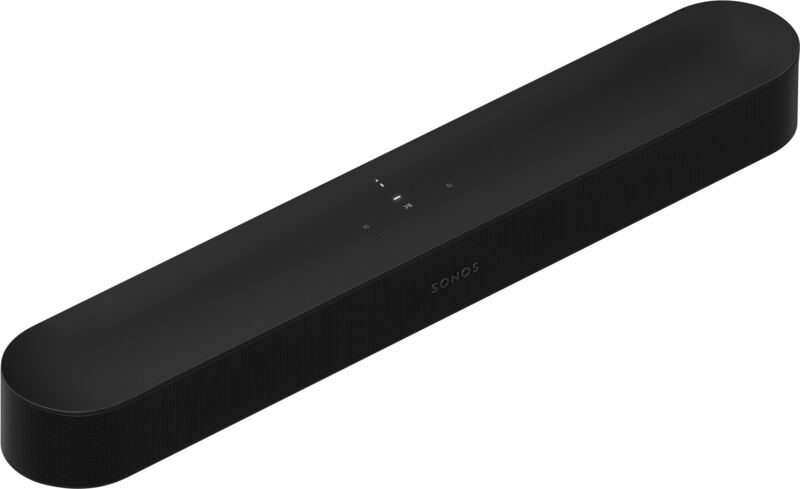
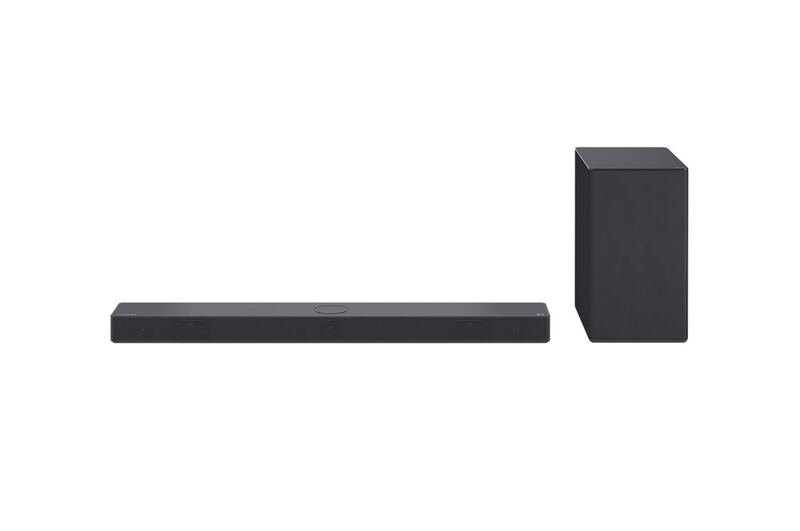
It's also worth being realistic about the height layer. Two up-firing drivers in a 5.1.2 layout produce a convincing sense of overhead space, but they don't isolate individual Atmos objects as precisely as the LG SC9S's triple up-firing array can. And while the bar is a strong all-rounder, the brightness in the top octave means treble-sensitive listeners who run things loud may prefer the warmer, smoother voicing of the Sonos Beam Gen 2 for music-heavy use.
A system with a subwoofer included
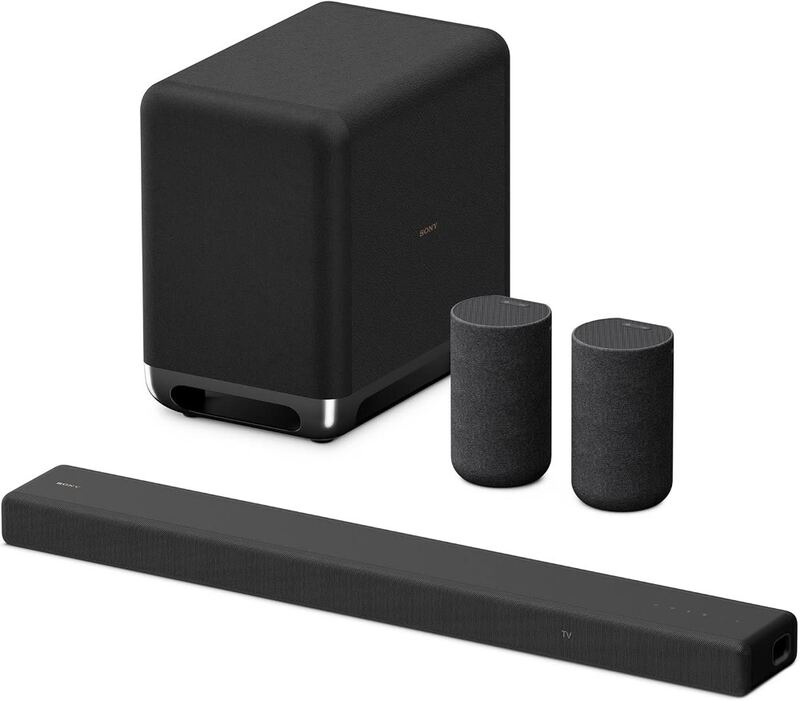
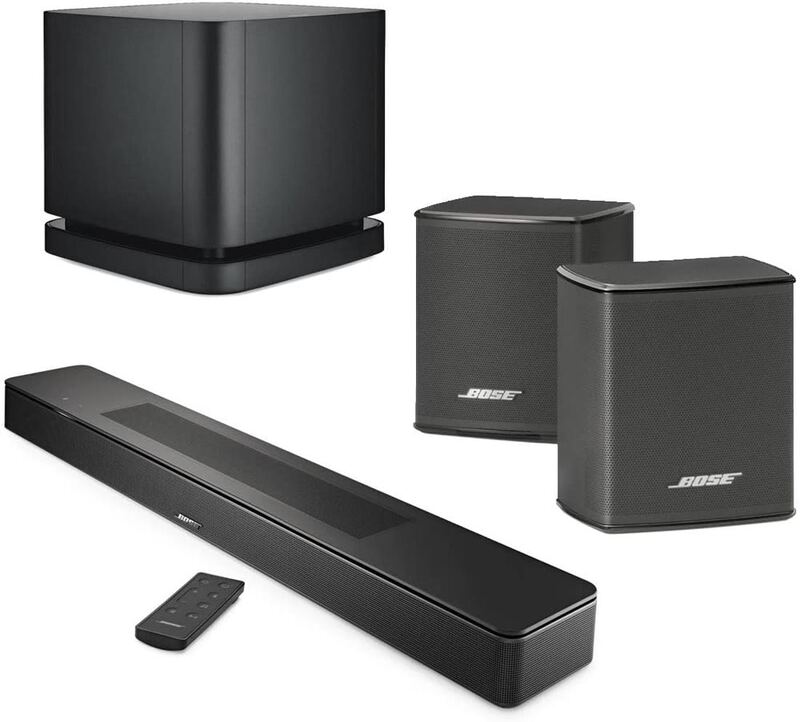
Within this guide the HW-Q800D is the most complete physical system. The Sonos Beam Gen 2 and Bose Smart Soundbar are tidier single cabinets but ship without a subwoofer, so neither matches the Samsung's low-end authority out of the box. The LG SC9S fields more up-firing drivers and a sub of its own, but reviewers consistently rate its tuning below the Samsung's, trading refinement for spectacle. The Sony HT-A3000 is cheaper and more compact but leans entirely on virtualization for height.
Stepping outside the guide, Samsung's own Q990-series flagships add discrete wireless rear speakers for true 11.1.4 surround, but they cost considerably more and break the $1,000 budget.
$798 street price undercuts Samsung's own Q990 flagship
At a typical street price around $798 – well under the $1,000 ceiling and often discounted further – the HW-Q800D undercuts Samsung's own flagship Q990 series while still delivering a true 5.1.2 layout and an external subwoofer. Consumer Reports judged that it "has very good overall sound quality" and "reproduces music and dialog very well," and TechRadar called it "one of the best mid-range Dolby Atmos soundbars around." That combination of a real height layer, a capable wireless sub and broad connectivity at a mid-tier price is the core of its value argument.
Crucially, you're getting the subwoofer in the box, where the similarly priced Sonos Beam Gen 2 and Bose Smart Soundbar both ask you to buy bass separately. Factor that in and the HW-Q800D is arguably the cheapest route to a genuinely room-filling, sub-equipped Atmos system in this guide, which is why it earns the top ranking despite its treble quirk.
The HW-Q800D is also a regular feature of seasonal sales, where it frequently dips well below its list price, making the value case even stronger. Buy it on a discount and you're getting flagship-style features – a real height layer, a capable wireless sub, room calibration and broad connectivity – for upper-mid-range money. That combination of completeness and recurring discounts is what cements its place near the top of this list.
Best for buyers with room for a separate subwoofer
The HW-Q800D is the pick for viewers who want the most cinematic, room-filling Atmos experience in this price bracket and have space for a separate subwoofer. It rewards a dedicated TV setup – especially a Samsung one – with genuine height effects and authoritative bass that the compact Sonos Beam Gen 2 and Bose Smart Soundbar can't physically match. If you want a single tidy cabinet with no external sub, or you primarily stream music in a small room, one of the all-in-one bars below may suit you better, but for movies it's the standout value.
Strengths
- +Powerful 5.1.2-channel system with 360W output and a genuinely capable wireless subwoofer that delivers serious low-end weight
- +Convincing wireless Dolby Atmos with real up-firing height channels that open up overhead effects
- +SpaceFit Sound auto-calibration tailors output to the room and Q-Symphony pairs it with Samsung TVs
- +Dedicated wireless subwoofer controls bass with authority, with clean start-and-stop transients
- +Strong value at its typical street price compared to flagship Atmos bars costing twice as much
Watch-outs
- −Treble can turn thin, hard and edgy at higher volumes
- −Q-Symphony and some features only fully unlock with a recent Samsung TV
- −No DTS:X support, which matters for some Blu-ray collections
- −Subwoofer output needs trimming in-app to avoid overpowering dialogue
How it compares
The HW-Q800D ships with a real external wireless subwoofer plus up-firing drivers, giving it more low-end authority and a bigger 5.1.2 soundstage than the all-in-one Sonos Beam Gen 2 or Bose Smart Soundbar. The LG SC9S matches its height ambitions but can't match its bass control, and the Sony HT-A3000 relies on virtualization rather than physical Atmos channels.
Rating sources
“This soundbar serves up a mighty sonic performance thanks to its 11 speakers and total power output of 360W. And you really feel that power at all times, whether watching movies or even just listening to music.”
“With a native Dolby Atmos soundtrack incoming via an HDMI socket, the HW-Q800D sounds spacious, direct and – as long as you've trimmed the output of the subwoofer effectively – quite impressively punchy.”
“Samsung's HW-Q800D has very good overall sound quality - although it has some noticeable sonic quirks, this model reproduces music and dialog very well.”
Our 4.2 score is the average of these published ratings. Ratings marked * were derived from the reviewer’s written analysis or video transcript — the publisher didn’t print an explicit numeric score, so we inferred one from their own words. Click through to verify. More about methodology.