The Sonos Beam Gen 2 is the best compact, all-in-one Dolby Atmos soundbar under $1,000. Without any up-firing drivers it uses processing and forward-facing drivers to recreate Atmos more convincingly than many pricier bars, while delivering crisp dialogue and a warm, musical balance. It can't reach the bass depth of a system with a separate subwoofer, but for small-to-medium rooms and Sonos households it's a five-star performer.
Full review
Simulates Atmos with zero up-firing drivers
The Beam Gen 2's headline trick is producing convincing Dolby Atmos with zero up-firing drivers. The soundstage stretches well beyond the cabinet's 25-inch footprint – What Hi-Fi paired it with screens from 43 to 65 inches and found "it enhances the cinematic scale and viewing experience for all three."
TechRadar named it the top soundbar for small spaces, and that framing matters: this is a bar engineered to disappear in an apartment or bedroom while still throwing a wide, height-suggesting image. It won't shake the room like a subwoofer-equipped system, but the sense of space and steering it pulls off from a single box is genuinely impressive.
New center tweeter sharpens dialogue over the Gen 1
Beyond Atmos, the Beam Gen 2 is simply a pleasant listen. What Hi-Fi described it as "reaching deeper than the Beam Gen 1 with more refinement, a warmer treble, and wider dynamic range," which makes it as comfortable with music streaming as it is with movies. The tonal balance is warm rather than clinical, so dialogue-heavy dramas and acoustic tracks sound natural.
Dialogue is a particular strength. What Hi-Fi credited "the improved centre tweeter that the company claims produces crisper and clearer dialogue than the original Beam," and in practice voices stay intelligible even during busy action scenes without needing a dedicated speech-enhancement mode cranked up.
Just 25.6 inches wide with a single HDMI port
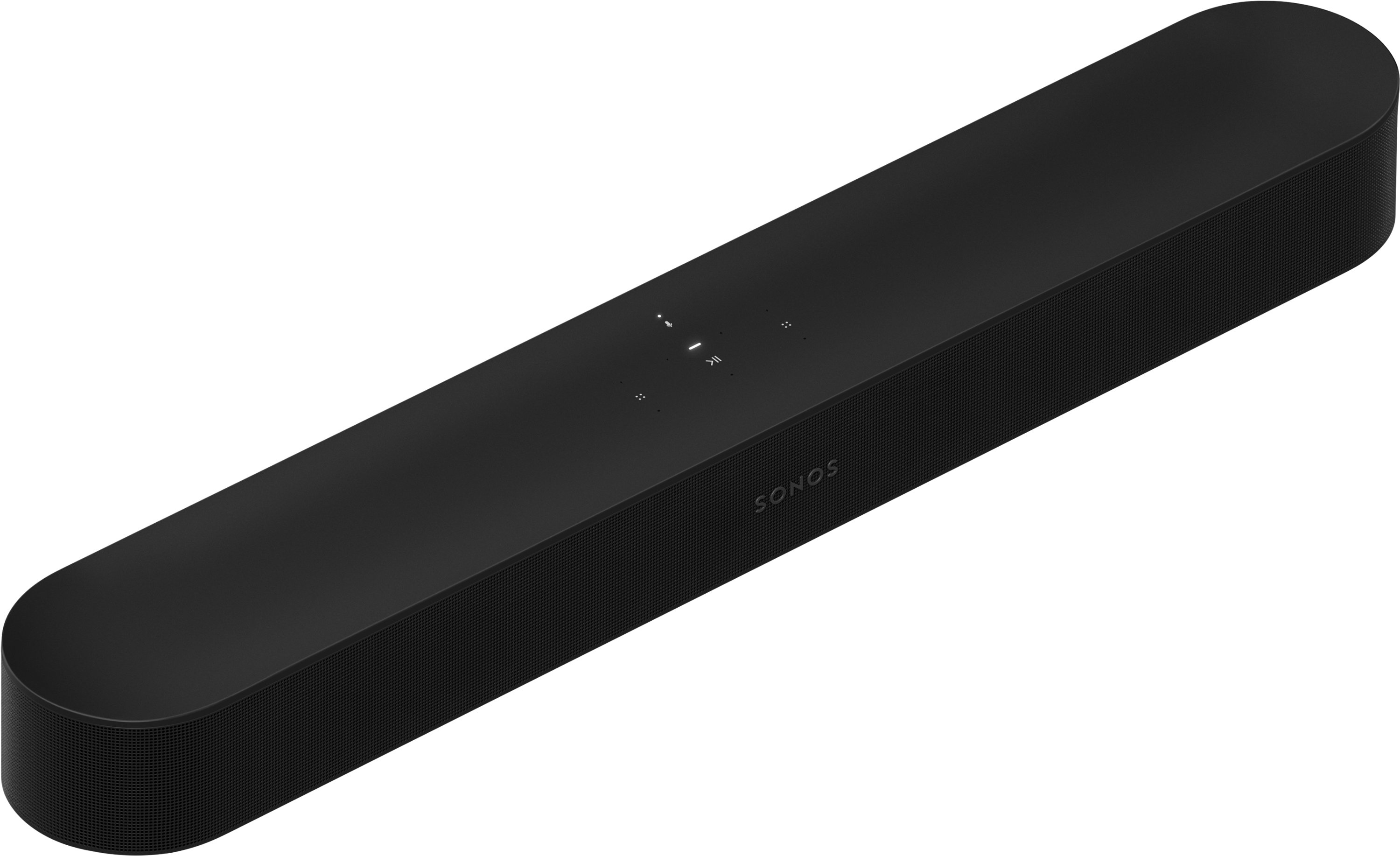
Sonos wraps the Beam Gen 2 in a polycarbonate grille that looks cleaner and is easier to wipe down than the original's fabric. At 25.6 inches wide it's one of the smallest true-Atmos bars available, which is the whole point – it's designed to tuck under compact TVs and in tight media consoles. Build quality feels premium and the unit is reassuringly dense for its size.
The Beam keeps physical controls to a discreet capacitive touch panel on top for play, pause, volume and grouping, with the rest handled in-app or by voice. There's no display, in keeping with Sonos's minimalist design language, and the single HDMI eARC port and power input are recessed neatly at the rear. It's the kind of bar that looks at home in a living space rather than announcing itself as AV gear.
Trueplay room tuning requires an iPhone or iPad
The Beam Gen 2 plugs into the broader Sonos platform, which means AirPlay 2, multiroom grouping with other Sonos speakers, built-in Amazon Alexa and Sonos Voice Control, and Trueplay room tuning. Trueplay measures your room's acoustics and adjusts the output, though the full calibration still leans on an iOS device. Setup through the Sonos app is among the most polished in the category, and the bar can later be expanded with a Sonos Sub and rear surrounds if you want to grow into a full system.
Day-to-day, the software is the Beam's quiet advantage. The same app drives every Sonos product in the home, so the bar joins multiroom groups, streams from dozens of services natively, and updates over the air. A dedicated speech-enhancement toggle and night mode tame loud action scenes for late viewing. The main friction is that the deepest tuning (Trueplay) wants an iPhone or iPad, which Android-only households can't fully use.
No spare HDMI port for extra sources
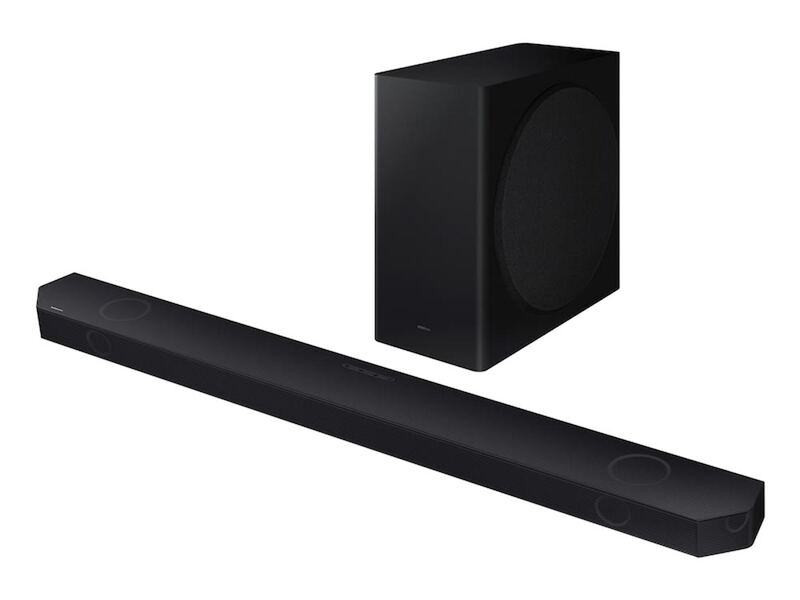
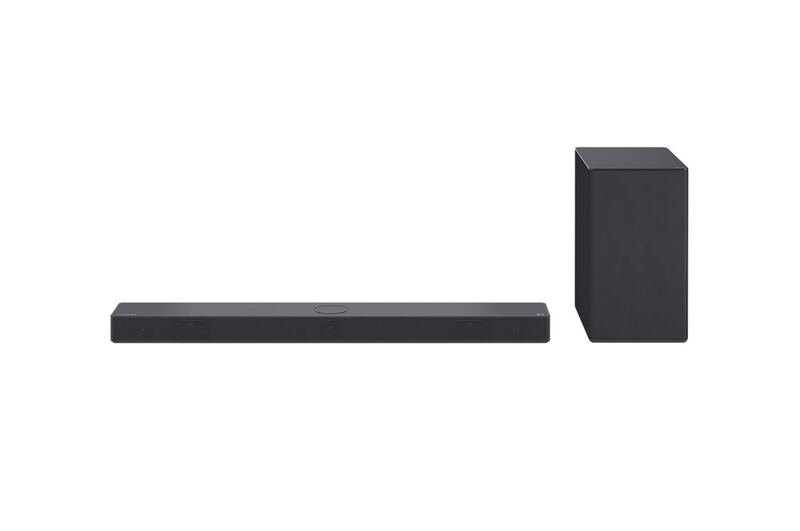
The compromises are physical. With no up-firing drivers, overhead effects are simulated, so listeners chasing pinpoint object placement will prefer the Samsung HW-Q800D or LG SC9S. Connectivity is sparse: What Hi-Fi noted "no additional HDMI ports," so there's a single HDMI eARC connection and no passthrough for extra sources. And without a subwoofer in the box, deep bass is limited – fine for dialogue and music, but action films lack the low-end slam of a 2.1-or-better system until you add the optional (and pricey) Sonos Sub.
There's also the cost-of-expansion question. Sonos's strength – a system you can grow – cuts both ways: the Sub and rear surrounds that turn the Beam into a full home-cinema rig are expensive add-ons, so the all-in price to match a sub-equipped Samsung HW-Q800D climbs quickly. For buyers who want everything in one purchase, that upgrade ladder is a downside as much as a feature.
Beats the Sony HT-A3000 on dialogue not bass
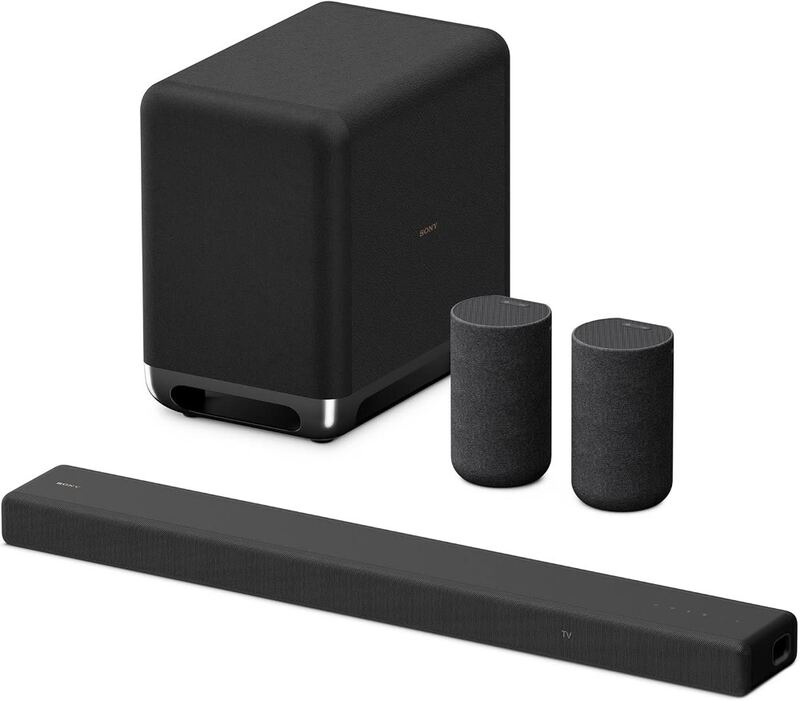
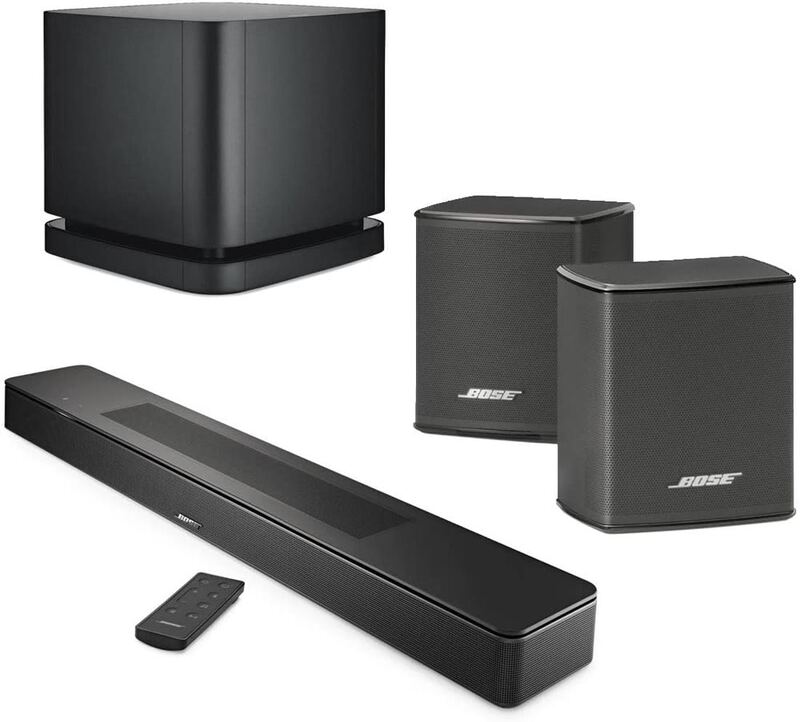
Against the Bose Smart Soundbar at the same $499, the Beam Gen 2 gives up physical up-firing drivers but wins on sound quality and ecosystem depth, which is why it ranks higher here. The Samsung HW-Q800D and LG SC9S both outgun it on raw scale and bass thanks to included subwoofers and larger arrays, but they're bigger, busier systems – the Beam's appeal is doing so much from one small box. The Sony HT-A3000 has more built-in bass but can't match the Beam's dialogue clarity or polish.
Compared with Sonos's own larger Arc and Arc Ultra, the Beam trades some bass extension and a couple of channels for a much smaller footprint and lower price. For a small-to-medium room it's the smarter buy of the Sonos line, and for anyone already running Sonos elsewhere it's close to a default recommendation.
Held a five-star rating across multiple award cycles
At $499 the Beam Gen 2 sits in the middle of this guide on price but at the top on per-dollar polish. What Hi-Fi's five-star verdict reflects that it punches above its size and cost, and TechRadar's framing as "the top soundbar for small spaces" underscores that you're paying for engineering and ecosystem rather than sheer driver count. Compared with cheaper bars, the Sonos buys you better dialogue, a more refined tonal balance and a platform you can grow.
The value calculus shifts if you already own Sonos gear or plan to: the Beam slots into multiroom groups, pairs with a Sonos Sub and rear Ones later, and inherits AirPlay 2 and voice control at no extra cost. For a buyer who values that flexibility and a single tidy cabinet, it's money well spent; for someone who just wants the most bass and height per dollar, the subwoofer-equipped Samsung HW-Q800D is the stronger raw-value play.
It's also worth weighing longevity. Sonos backs the Beam with regular firmware updates and it has held its five-star standing across multiple What Hi-Fi Award cycles, so it's unlikely to feel dated quickly. That track record, plus the resale strength of the Sonos brand, makes the initial outlay easier to justify even though the bar costs more than the entry-level Sony HT-A3000.
Best for viewers who also love music
The Beam Gen 2 is the obvious choice for small rooms, apartments and anyone already invested in Sonos. It delivers the most convincing one-box Atmos in this guide, excellent dialogue, and best-in-class music and multiroom features, all from a cabinet small enough to vanish under a TV. Buyers who want maximum cinematic impact, real height channels or chest-thumping bass without buying add-ons should step up to the Samsung HW-Q800D; everyone prioritizing tidiness, music and ecosystem will be very happy here.
It's the soundbar we'd recommend to someone who watches a fair amount of TV but also listens to a lot of music, since few rivals at this price balance the two so gracefully. If your viewing skews heavily toward action films and you have the space and budget for a full system, the Samsung is the better fit; for everyone living in a smaller space who wants a beautiful-sounding, future-proof one-box solution, the Beam Gen 2 is the easy call.
Strengths
- +Best-in-class virtualized Dolby Atmos from a single compact cabinet, with no external speakers needed
- +Excellent, clearly defined dialogue thanks to an upgraded center tweeter
- +Full Sonos ecosystem: AirPlay 2, Trueplay room tuning, multiroom and voice assistants built in
- +Warm, refined, musical sound that handles streaming music as well as movies
- +Compact 25-inch width fits small rooms and apartments where larger bars won't
Watch-outs
- −No physical up-firing drivers, so overhead effects are simulated rather than truly height-mapped
- −Only one HDMI eARC port and no HDMI passthrough or extra inputs
- −Lacks the deep, physical bass of a system with a dedicated subwoofer
- −Trueplay auto-tuning still requires an iOS device for the full calibration
How it compares
The Sonos Beam Gen 2 trades the physical up-firing height drivers of the Samsung HW-Q800D and LG SC9S for clever virtualization, which keeps it far more compact but limits true overhead mapping. Unlike the Samsung HW-Q800D it ships with no external subwoofer, so it gives up deep bass, but it beats the Sony HT-A3000 for dialogue clarity and out-of-the-box Atmos convincingness, and adds the Sonos multiroom ecosystem the Bose Smart Soundbar can't fully match.
Rating sources
Our 4.2 score is the average of these published ratings. More about methodology.