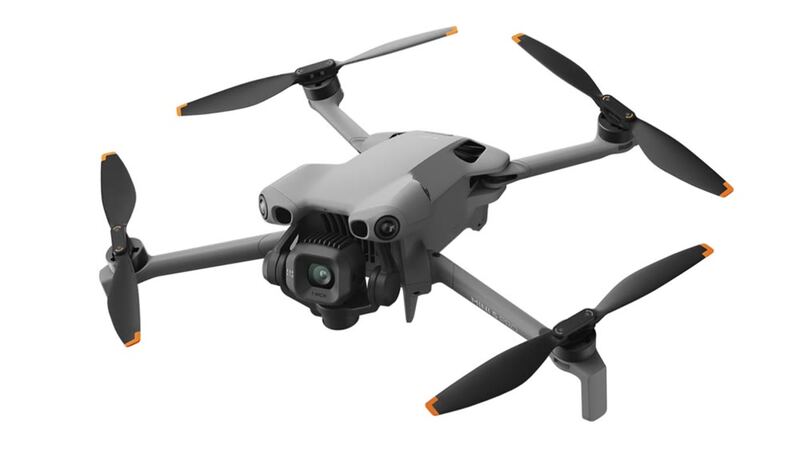
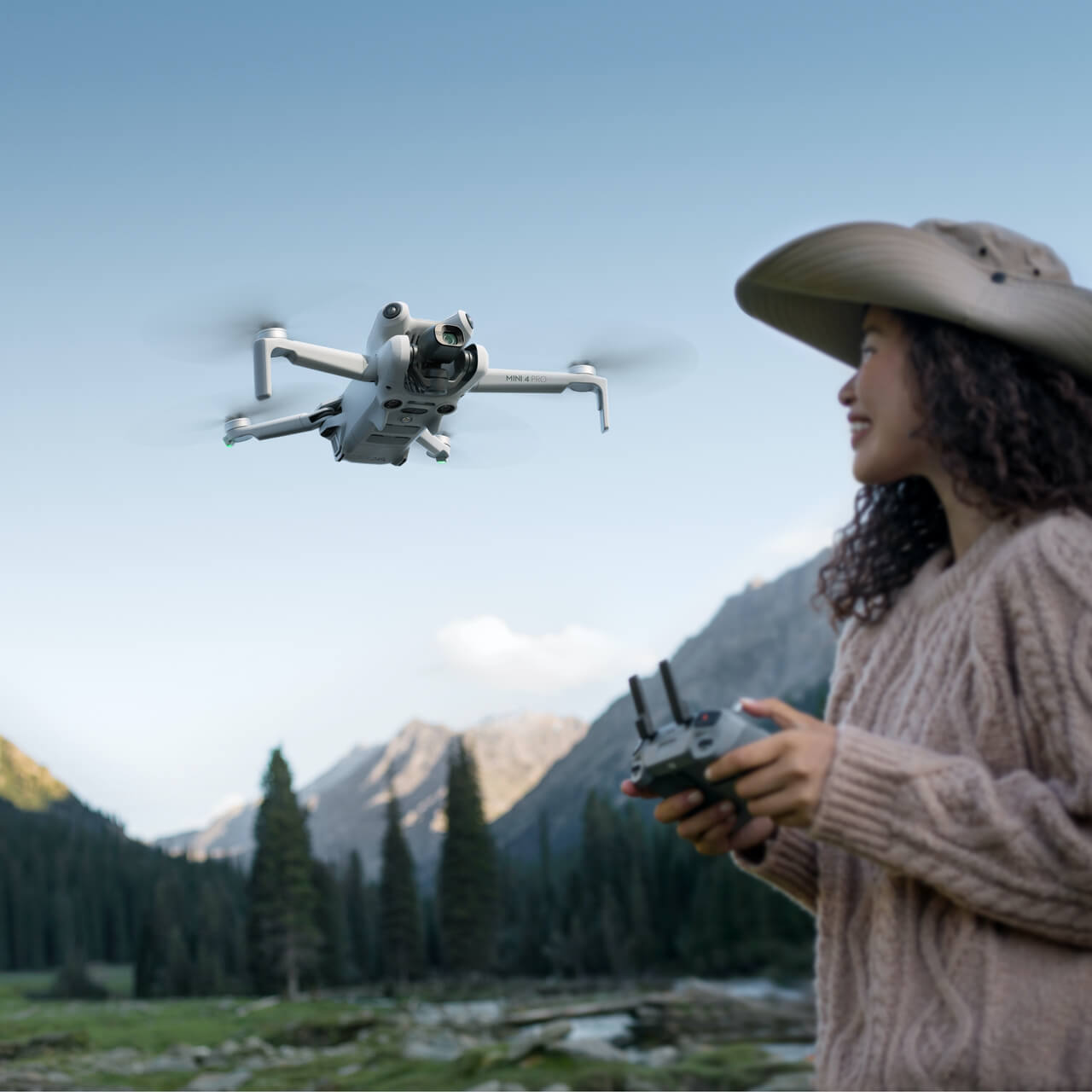
The DJI Mini 4 Pro is a near-flawless sub-250g drone and an outstanding buy now that the Mini 5 Pro sits above it. It pairs full 360-degree obstacle avoidance with an excellent Quad Bayer camera, vertical video, and around 34 minutes of flight time. Against the Mini 5 Pro, its limitations come down to the smaller sensor and the missing LiDAR.
Full review
Named an Editors' Choice ultralight drone by PCMag
Before the Mini 5 Pro arrived, the DJI Mini 4 Pro was the consensus best sub-250g drone, and it remains an excellent performer. TechRadar, awarding 4.5 stars, called it a superb sub-250g drone with features that make it ideal for professional and enthusiast use alike. PCMag named it an Editors' Choice and concluded that all-around obstacle avoidance, vertical video, and a registration-free takeoff weight make the DJI Mini 4 Pro the best ultralight drone it had tested at the time.
In flight it is stable, responsive, and confidence-inspiring, with DJI's mature flight modes and the reliable O4 transmission providing a smooth, long-range video feed. Space.com awarded it 4.5 stars and noted it takes the title of the best sub-250g drone available thanks to a handful of impressive new features, though it tempered that by adding it is not leaps and bounds ahead of the Mini 3 Pro. For most pilots, the Mini 4 Pro hits the sweet spot of capability and approachability.
48MP stills from a 1/1.3-inch Quad Bayer sensor
The Mini 4 Pro's camera is built around a 1/1.3-inch Quad Bayer sensor that captures detailed 48MP stills and swaps cleanly between widescreen and true vertical video, which PCMag singled out as a standout feature for social creators. The D-Log M profile gives a neutral starting point for color grading, so you can tune the look to taste in post, and the 4K/100fps mode enables genuinely smooth slow motion that elevates B-roll.
Image quality in good light is excellent and holds up well for a drone this small, per Space.com, though it is here that the gap to the newer Mini 5 Pro is clearest: without a 1-inch sensor, the Mini 4 Pro is noisier and less detailed in low light. For daytime shooting, travel footage, and social content, the difference is modest, and the Mini 4 Pro still produces footage that looks polished and professional straight off the gimbal.
Flight and Safety Features
The Mini 4 Pro's marquee upgrade over its predecessor is full 360-degree omnidirectional obstacle avoidance, which TechRadar credited with making it safer to fly in more complex environments. That all-around sensing is a genuine confidence booster for beginners threading through trees or flying near structures, and it was the key feature that earned the drone its Editors' Choice from PCMag, which praised the security it gives newcomers.
Flight time is a practical highlight: PCMag's independent testing confirmed close to the expected 34 minutes in Normal mode with obstacle avoidance enabled, which is strong endurance for a sub-250g drone and translates to real shooting time per battery. Combined with advanced return-to-home, ActiveTrack subject tracking, and DJI's stable transmission, the Mini 4 Pro delivers a complete, dependable flying experience that still holds up well against newer competition.
No LiDAR or GPS-free return, unlike its successor
The Mini 4 Pro's limitations are mostly defined by what the Mini 5 Pro added afterward. It lacks the larger 1-inch sensor and the forward LiDAR of its successor, so it trails in low-light image quality and does not have the GPS-free return-to-home capability. Space.com's measured take, that it is not leaps and bounds ahead of the Mini 3 Pro, also signals that the generational gains here were iterative rather than dramatic.
There are practical cost caveats too. Getting the most out of the drone, especially multiple flights in a session, really requires the pricier Fly More Combo with its extra batteries, since a single battery limits you to one flight. And while the camera is excellent, anyone who shoots heavily after dark or wants the absolute best image quality will feel the pull toward the Mini 5 Pro. For most buyers these are acceptable trade-offs for the lower price.
Shares the Mini 5 Pro's DNA at a lower tier
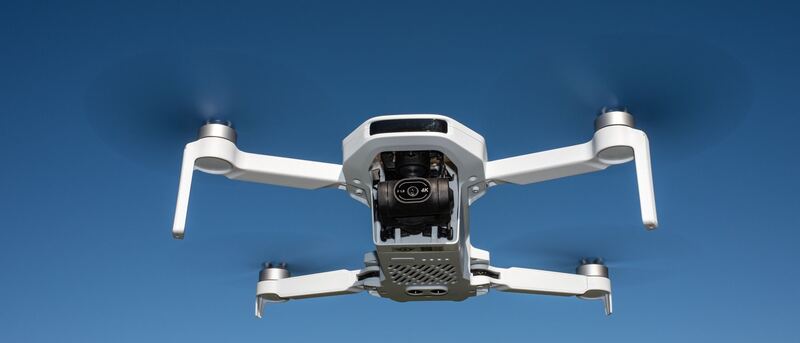
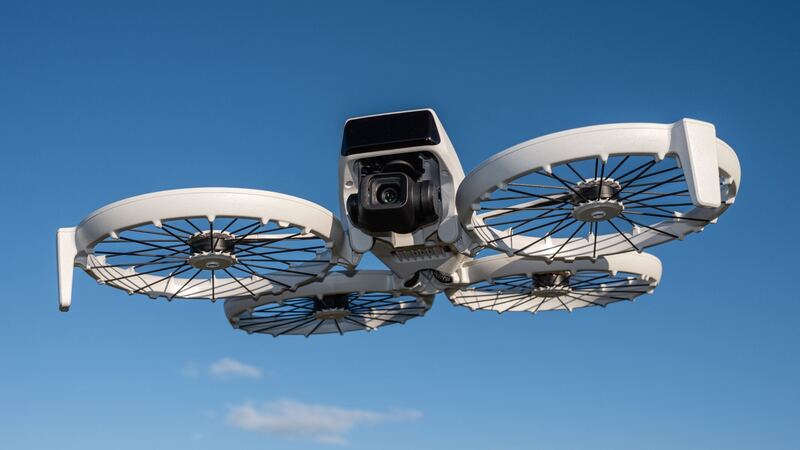
The Mini 4 Pro sits directly below the Mini 5 Pro and shares its DNA: both are sub-250g drones with omnidirectional sensing and vertical video, but the Mini 5 Pro adds a 1-inch sensor, LiDAR, and a 225-degree gimbal. If image quality and the latest safety tech matter most, the Mini 5 Pro is worth the premium; if value matters more, the Mini 4 Pro delivers the vast majority of the experience for less. Against the budget DJI Flip and Potensic Atom 2, the Mini 4 Pro wins clearly on sensing, camera, and range.
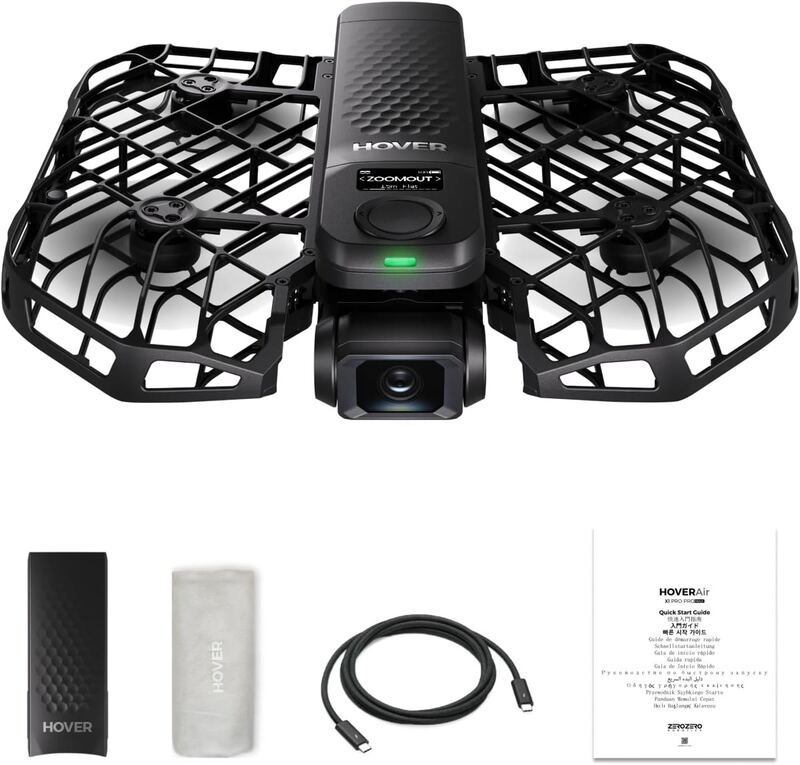
It also differs fundamentally from the HoverAir X1 Pro, which is a hands-free follow drone rather than a full manual-control camera drone with obstacle avoidance and long-range transmission. The Mini 4 Pro's place in this list is as the proven, slightly more affordable alternative to the top pick, a drone that was the best in class until very recently and remains a thoroughly safe and capable choice.
$759, often close to the Mini 5 Pro's price
At $759, the Mini 4 Pro often sells for only a little less than the Mini 5 Pro's base price, which makes the value calculation interesting. If you can find it discounted, it is excellent value, delivering full obstacle avoidance, a strong camera, and 34-minute flights for a registration-free drone. If the price gap to the Mini 5 Pro is small, however, most buyers should stretch to the newer model for the bigger sensor and LiDAR.
The Mini 4 Pro makes the most sense as a value buy when it is meaningfully cheaper than the Mini 5 Pro or bundled attractively, or for buyers who specifically do not need 1-inch-sensor image quality. The Fly More Combo adds the batteries that turn it into a practical all-day tool. As a known-good, widely supported drone with a deep accessory ecosystem, it remains a smart, lower-risk purchase in the sub-250g class.
For good-light shooters who skip the 1-inch sensor
The Mini 4 Pro is for buyers who want a proven, registration-free camera drone with full 360-degree obstacle avoidance and a capable camera, but who would rather not pay top dollar for the latest 1-inch-sensor model. It is an ideal first serious drone for someone who shoots mostly in good light, values the safety of all-around sensing, and wants DJI's reliability and ecosystem.
Shoppers who frequently fly in low light, want the best possible footage, or value the newest safety tech should spend up for the Mini 5 Pro, while those on a tighter budget can drop to the DJI Flip or Potensic Atom 2. Anyone after a hands-free follow camera should look at the HoverAir X1 Pro. But as a dependable, slightly cheaper alternative to the category leader, the Mini 4 Pro is a strong second choice.
Strengths
- +Sub-250g take-off weight sidesteps registration requirements in most regions, per PCMag
- +Full 360-degree omnidirectional obstacle avoidance for safe, confident flying
- +Excellent Quad Bayer camera with vertical video and D-Log M for grading
- +4K/100fps slow motion, per TechRadar, and DJI's reliable O4 transmission
- +Around 34 minutes of real-world flight time per battery
Watch-outs
- −Smaller sensor and no LiDAR compared with the newer Mini 5 Pro
- −Iterative rather than revolutionary upgrade over the Mini 3 Pro
- −Top performance and longer flights require the pricier Fly More Combo
- −No 1-inch sensor means it trails the Mini 5 Pro in low light
How it compares
The step below the DJI Mini 5 Pro, trailing it mainly on sensor size and the lack of LiDAR, but cheaper and still offering full omnidirectional avoidance. Far more capable than the budget DJI Flip and Potensic Atom 2, and a true manual-control camera drone rather than a hands-free follow camera like the HoverAir X1 Pro.
Rating sources
“The DJI Mini 4 Pro is a superb sub-250 g drone with features that make it ideal for professional and enthusiast use alike. Video functionality has been improved... while Omnidirectional Vision Sensing makes it safer to fly the drone in more complex environments.”
“All-around obstacle avoidance, vertical video, and a registration-free takeoff weight make the DJI Mini 4 Pro the best ultralight drone we've tested.”
“The DJI Mini 4 Pro takes the title of the best sub-250g drone available thanks to a handful of impressive new features, but it's not leaps and bounds ahead of the DJI Mini 3 Pro.”
Our 4.5 score is the average of these published ratings. More about methodology.