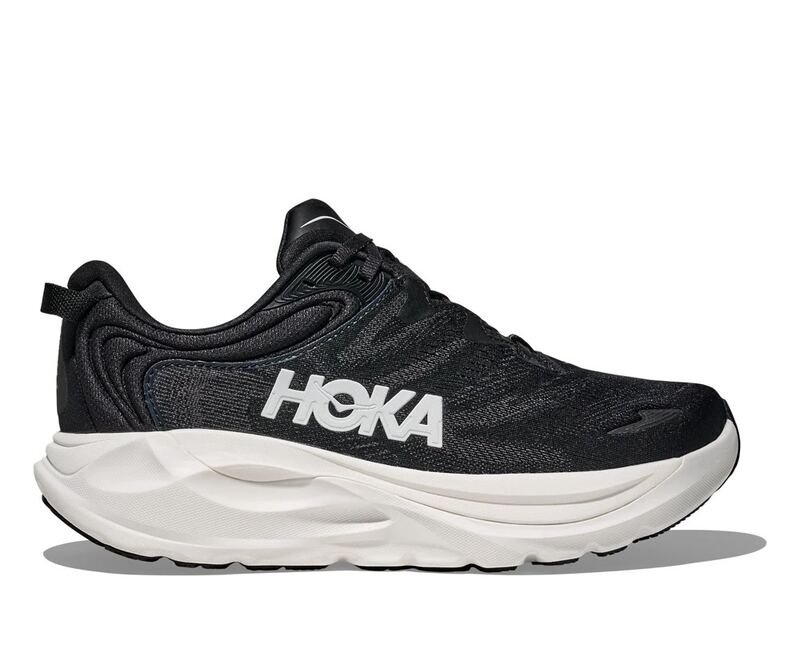
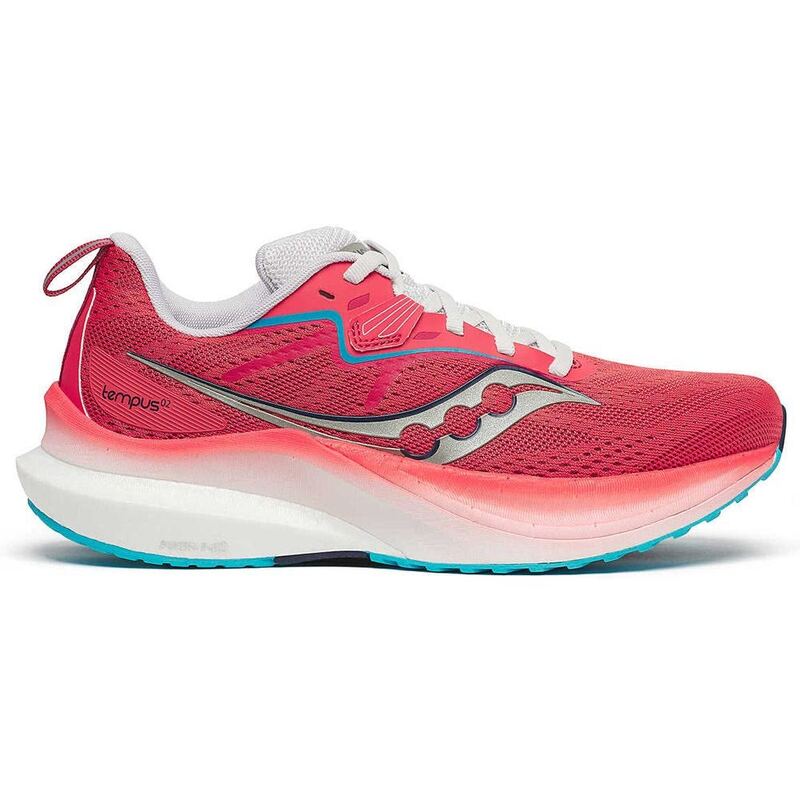
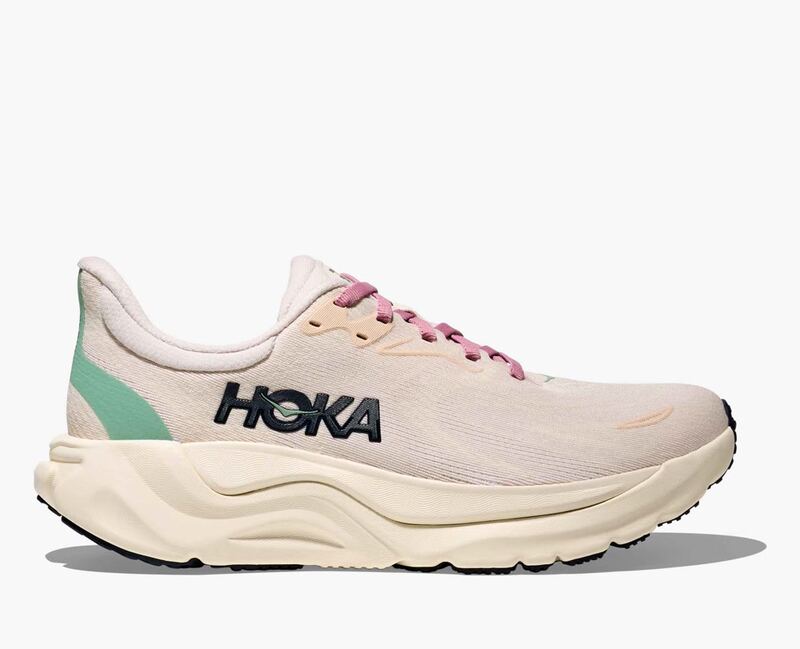
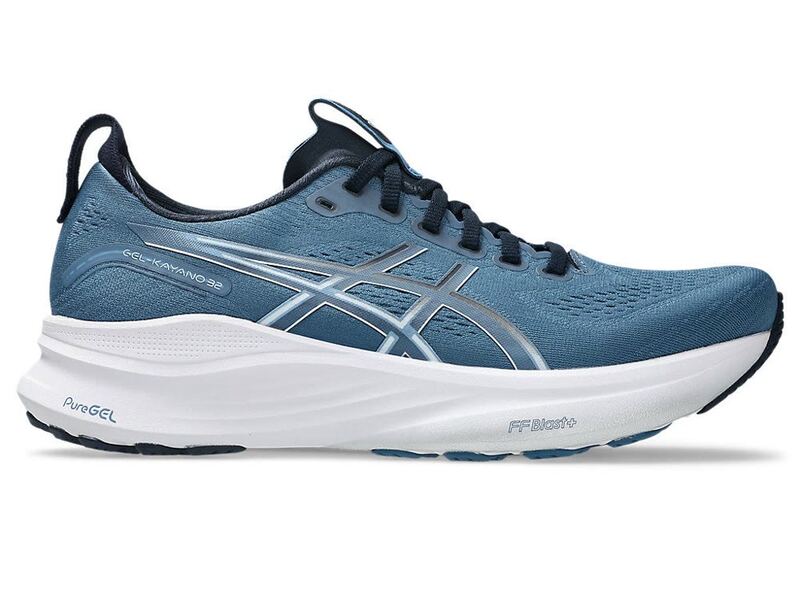
Stability and pronation control are the Saucony Guide 18's job, and Tom's Guide's verdict is that it 'fits like a glove, feels genuinely comfortable on the run, and provides mild stability for extra control with each stride.' RunRepeat praised the breathable upper and the cushioning on long runs while noting the outsole leaves too much foam exposed, which raises durability questions. Tom's Guide found the improved mesh upper 'hugged my foot comfortably without any hot spots or areas of rubbing,' but warned that 'it's not a shoe that's going to blow you away with speed or bounce' because 'there's only so much energy return here.' It fits runners who want a stable, supportive daily trainer at a reasonable price; anyone chasing a more responsive ride should consider the Brooks Glycerin GTS 21.
Full review
Stability Performance
The Saucony Guide 18 maintains the Center Path technology introduced in the Guide 17, which replaces traditional medial posts with a redesigned geometry featuring raised sidewalls and a wider base. According to the Doctors of Running review, this approach aims to guide the foot naturally without forcing correction, offering a less intrusive stability solution. Runners like Matt Klein, a physical therapist, found the stability to be good, noting it provides more structure than a Nimbus 27 but without being overly restrictive. However, the stability system doesn't offer the same level of correction as more aggressive options like the ASICS GT-2000 13 or Brooks Glycerin GTS 21, making it more suitable for light to moderate pronators. The shoe's effectiveness was tested by Kevin Le Gall from Runners Lab, who reported that while the stability is adequate for long runs, it doesn't provide the dynamic support needed for runners seeking more pronounced correction or those with severe pronation issues.
Cushioning and Comfort
The Guide 18 utilizes Saucony's PWRRUN foam midsole with a PWRRUN PB insole for added comfort, delivering a balanced and classic feel. Tom's Guide measured 124 SA (Shock Absorption) in the heel and 119 SA in the forefoot, which they noted as average but still comfortable for long distances. The cushioning provides 35mm of heel stack and 29mm in the forefoot, with a 6mm drop. Runners like Jeremy Yoder from Running Shoes Guru praised the plush, forgiving midsole that feels natural and comfortable for all-day wear. However, the energy return is described as moderate, lacking the trampoline effect of newer foams such as PEBA found in models like the Saucony Endorphin Speed 3. Kevin Le Gall from Runners Lab emphasized that while the cushioning is sufficient for easy runs and long distances, it doesn't offer the bounce needed for fast sessions or racing. The shoe's comfort was also validated by Bach Pham from Doctors of Running, who found the fit to be comfortable throughout, with no pressure points or friction issues, though the upper's thin mesh may compromise durability over time.
Upper Construction and Fit
The upper of the Saucony Guide 18 has been refined from the Guide 17, featuring ultra-thin engineered mesh for enhanced ventilation. According to Runners Lab's Kevin Le Gall, the mesh provides an excellent balance between support and breathability, with elasticity that adapts well to different foot shapes. Jeremy Yoder from Running Shoes Guru noted that the upper is very breathable, especially beneficial in hot weather, and the lacing system allows for precise adjustments. The gusseted tongue prevents movement during runs, and the heel collar provides a secure fit. However, the thin mesh upper, while improving ventilation, may compromise durability, as noted by RunRepeat's reviewer who pointed out that the exposed foam on the outsole could be a concern for heavy strikers. The fit is described as true to size, with a normal width throughout the shoe, though some runners reported a slightly snug midfoot and a lower instep volume that requires careful lacing to avoid tightness.
Outsole and Traction
The outsole of the Saucony Guide 18 uses strategically placed XT-900 rubber on main wear zones, with some exposed foam areas to reduce weight. Runners Lab's Kevin Le Gall noted that this setup offers satisfactory grip on dry asphalt and typical urban surfaces, though traction is described as decent on wet terrain, requiring caution on damp surfaces like tiles. The outsole design leaves significant foam exposed, which RunRepeat's reviewer identified as a potential durability concern for runners with heavier foot strikes. The shoe's traction is adequate for daily training and urban running, but not suited for technical trail use. The flex grooves are well-placed to maintain fluid movement, and the sole geometry allows for a natural foot roll without being too stiff or too soft. However, the exposed foam areas may wear faster than rubber-covered sections, as highlighted by the RunRepeat analysis.
Performance in Real-World Scenarios
The Saucony Guide 18 excels in daily training and long-distance runs, particularly between 10 and 25 kilometers. Runners Lab's Kevin Le Gall found it ideal for easy paces and long runs, noting that the cushioning remains effective even after many kilometers, with no sensation of fatigue or hard striking. The Guide 18's performance was also validated by Jeremy Yoder from Running Shoes Guru, who described it as an excellent workhorse for high-mileage training and injury rehabilitation. However, the shoe's lack of responsiveness makes it less suitable for fast intervals or tempo runs, as noted by Runners Lab. The shoe's performance in marathon scenarios was also discussed, with Yoder suggesting it could be a viable option for runners prioritizing comfort and stability over pure speed.
Exposed outsole foam risks durability
Despite its strengths, the Saucony Guide 18 has notable drawbacks that limit its appeal for certain runners. One major concern is the lack of energy return, with Runners Lab's Kevin Le Gall noting that the PWRRUN foam offers only moderate energy return, lacking the bounce of newer foams. This makes the shoe less suitable for fast-paced running or racing, where a more responsive ride is necessary. Additionally, the exposed foam on the outsole, as highlighted by RunRepeat, poses a durability risk for runners with heavier foot strikes. The Guide 18 also lacks the visual appeal and premium feel that some runners expect from modern stability shoes, with Running Shoes Guru's Jeremy Yoder pointing out that it doesn't quite live up to standards for stylish or premium daily trainers. Finally, the shoe's limited flexibility makes it less ideal for runners seeking a more dynamic ride, as noted by the Runners Lab review.
Best ventilation of any recent Guide model
The Saucony Guide 18 is best suited for runners seeking a stable, cushioned daily trainer that offers comfort for long runs and high mileage training. It is ideal for light to moderate pronators who want a non-intrusive stability solution, as confirmed by Doctors of Running's Matt Klein and Kevin Le Gall from Runners Lab. The shoe is also recommended for runners recovering from injury or those looking for a reliable, all-day trainer that provides consistent support and comfort. RunRepeat's reviewer noted that it's a solid choice for those who found past Guide models lacking in ventilation, as the Guide 18 excels in airflow. However, it is not recommended for runners seeking a responsive, fast-paced shoe, or those who prioritize visual appeal and premium feel. The Guide 18 is also not ideal for trail running, as its outsole design is tailored for urban surfaces. Runners looking for more bounce or aggressive stability should consider alternatives like the ASICS GT-2000 13 or Brooks Glycerin GTS 21.
Glycerin GTS 21 beats it on outsole durability
When compared to similar stability shoes, the Saucony Guide 18 holds its own but falls short in some areas. Compared to the Brooks Glycerin GTS 21, the Guide 18 offers less outsole protection, with the Glycerin GTS 21 providing significantly better outsole durability and traction, as noted by RunRepeat. In contrast, the ASICS GT-2000 13 offers more pronounced stability and energy return, making it a better choice for runners seeking more dynamic performance. The Guide 18 also compares favorably to the Hoka Arahi 7 and Mizuno Wave Inspire 19 in terms of cushioning and comfort, though it lacks the responsiveness and visual appeal of these alternatives. Runners Lab's Kevin Le Gall highlighted that while the Guide 18 is a reliable stability shoe, it doesn't reinvent the genre, and more responsive options like the Saucony Tempus 2 or Endorphin Speed 3 are available for runners seeking faster performance. The Guide 18 is best positioned as a solid, dependable option for daily training, but not as a premium or high-performance alternative.
Strengths
- +Ultra-breathable upper design improves comfort and ventilation
- +Excellent pronation control and stable ride for overpronators
- +Cushioned enough for long runs and comfortable for walking
- +Impressively wide platform and secure lockdown with PWRRUN PB insole
Watch-outs
- −Too much exposed foam on outsole raises durability concerns
- −Midsole feels a bit firm and lacks energy return
- −Outsole design doesn't provide sufficient rubber coverage for heavy strikers
How it compares
The Saucony Guide 18 provides better breathability than the New Balance Fresh Foam X 860 v14 and more pronation control than the Hoka Arahi 8, but it's less cushioned than the Brooks Adrenaline GTS 25 and lacks the energy return of the Saucony Hurricane 25. It's also less stable than the Hoka Gaviota 6.
Rating sources
Our 4.4 score is the average of the 7 scored reviews above; 1 more reviewed it without printing a score and is not in the average. More about methodology.