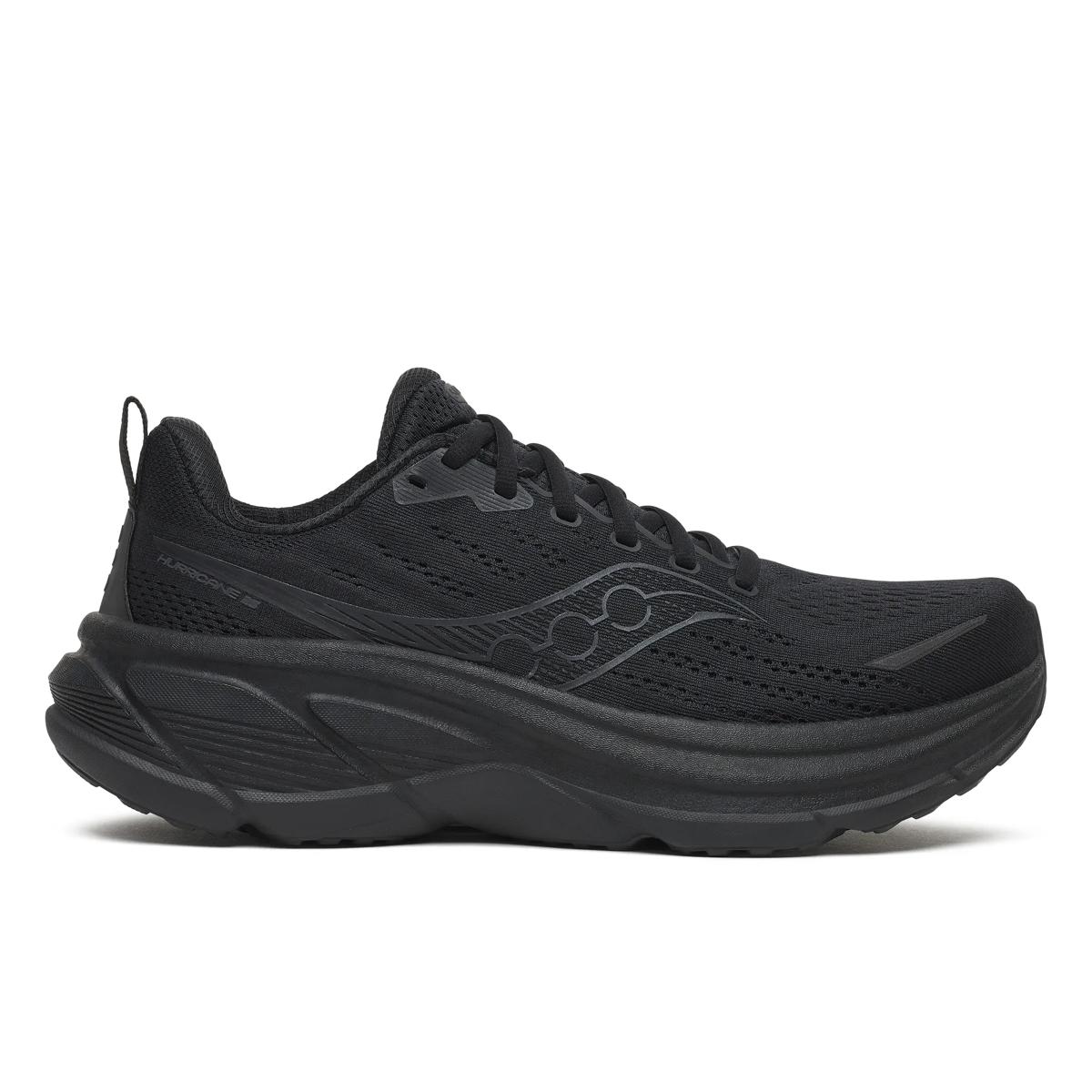
RunRepeat's lab tests show real gains for the Saucony Hurricane 25 in energy return, cushioning, and comfort, and it sheds a full ounce along the way. Doctors of Running praised the bouncy, soft ride and the lighter profile against previous versions, while noting the softer midsole can feel mushy and less stable. The redesigned midsole and improved geometry make for a smoother ride than the Hurricane 24, which suits daily trainers who want plush comfort with stability. Reviewers criticized the breathability and the bulk, both of which count against runners chasing agility or a lower price. It fits people who value maximal cushioning and stability over lightweight responsiveness.
Full review
74% forefoot rebound, tops in stability shoes
The Saucony Hurricane 25 is the max-cushioned stability trainer in Saucony's lineup — the Guide's plush sibling, offering the same overpronation control with significantly more underfoot cushioning. The dual-layer midsole combines springy PWRRUN PB (Saucony's PEBA-based foam) with the supportive PWRRUN foam for stability. RunRepeat's testing measured 68.4% rebound in the heel and 74.0% in the forefoot — propelling the Hurricane 25 into the top tier for stability shoes in terms of bounce. The platform suits mild-to-moderate overpronators who want max cushioning, particularly heavier runners and long-distance trainers.
Real-world ride is plush and surprisingly peppy. Believe in the Run and Run Weekly both confirmed the Hurricane 25 is peppy enough to go fast at moderate paces, with the PWRRUN PB foam providing energy return that traditional stability shoes lack. The CenterPath technology — Saucony's stability approach — provides a broad platform with high sidewalls and subtle rocker geometry. WearTesters' performance review noted the stability is gentler than previous Hurricane generations, which is more comfortable for long runs but may not satisfy severe overpronators who need aggressive motion control. The shoe is at its best for easy miles and recovery days according to multiple reviews.
1.2 ounces lighter than the Hurricane 24
The Hurricane 25's dual-layer midsole construction is the design's defining feature. The springy PWRRUN PB top layer provides energy return; the firmer PWRRUN bottom layer provides stability and structural support. The combination delivers max-cushion feel without the wobbly sensation that can come from soft single-foam stability shoes. Stack heights are aggressive for a stability shoe. The shoe weighs 10 oz for men's size 9 — 1.2 oz lighter than the Hurricane 24, a meaningful weight reduction in the max-cushion stability category.
Saucony's CenterPath technology integrates the stability features through midsole geometry rather than traditional medial-post construction. The broad platform and high sidewalls keep the foot stable during footstrike; the subtle rocker geometry helps guide the foot from heel to toe with ease. The upper uses engineered mesh with structured support at the heel and midfoot. The outsole uses high-abrasion rubber at high-wear zones; durability is competitive within the stability category.
A rare combo for runners over 175 pounds
The combination of max cushioning and stability is the runaway favorite feature. Running Lab Store, RunToTheFinish, and Believe in the Run all converge on the same observation: the Hurricane 25 delivers genuinely plush cushioning while maintaining the stability that overpronators need. For heavier runners (175+ pounds), the platform offers max-impact protection without sacrificing overpronation control — a combination that few shoes deliver well. The 1.2 oz weight reduction versus the Hurricane 24 is the most-cited specific upgrade; the shoe feels notably more agile than previous generations.
Reviewers also appreciate the PWRRUN PB foam's energy return. The 68-74% rebound percentages put the Hurricane 25 ahead of most stability shoes in the bounce department. Running Shoes Guru's review specifically called out the gentler stability approach as more comfortable for long runs than aggressive traditional stability shoes. The platform's positioning fills a real gap in the market — max-cushion stability for heavier runners or longer distances. Saucony's continued iteration of the platform supports long-term ownership confidence.
Too gentle for severe overpronators
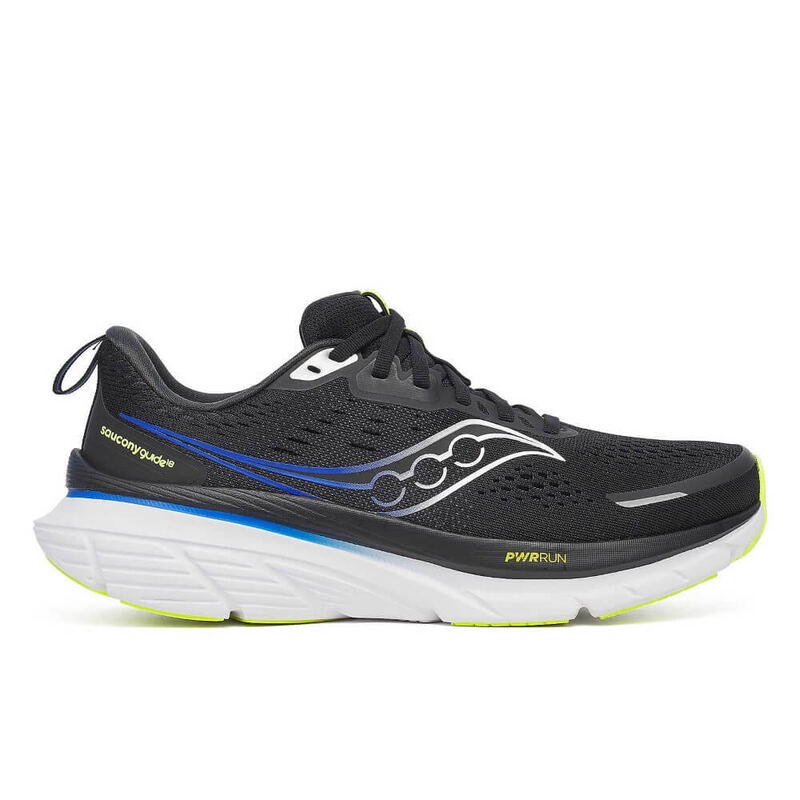
The gentler stability is the platform's intentional design choice and its biggest limitation. Reviewers consistently note that the Hurricane 25's stability is best for mild to moderate overpronation rather than severe cases. Runners needing serious motion control should look at the Brooks Beast GTS or ASICS Gel-Kayano 31 for more aggressive support. The shoe's max-cushion stack height isn't for everyone — runners who don't need the cushion may find the Saucony Guide 18 (less cushion, similar stability) more practical at lower price.
The price at $170 MSRP is on the high side of the stability category. The Brooks Adrenaline GTS 25 and Saucony Guide 18 both deliver effective stability at $140. For runners not specifically wanting max cushioning, the price premium is hard to justify. The platform's relevance is narrower than the Adrenaline or Guide — it's specifically for max-cushion stability buyers, a smaller market segment than mid-cushion stability.
30 dollars more than the Guide 18
Against the Saucony Guide 18 ($140), the Hurricane 25 offers significantly more cushioning at $30 more. For heavier runners or longer-distance training, Hurricane wins; for mid-distance training and lighter runners, Guide saves money. Against the Brooks Adrenaline GTS 25 ($140), the Hurricane offers more max-cushion feel with PEBA-based foam; the Adrenaline is more traditional. Against the Brooks Beast GTS ($170), the Hurricane is similarly priced with similar cushioning but gentler stability — Beast for severe overpronators, Hurricane for moderate.
Against the ASICS Gel-Kayano 31 ($165), the Hurricane offers more energy return with PWRRUN PB foam; the Kayano has more traditional ride with 4D Guidance stability. Against neutral max-cushion alternatives (ASICS Nimbus 27 at $165, Hoka Bondi 9 at $165), the Hurricane adds stability that the neutral shoes lack. The Hurricane's value proposition is specifically max-cushion plus stability.
Resells for 40 to 50 percent of retail
At $170 MSRP, the Hurricane 25 commands a premium within the stability category. The price is justified for buyers who specifically want max-cushion stability — a combination that's difficult to achieve in lower-priced alternatives. The PWRRUN PB foam delivers energy return that traditional stability shoes lack at any price. For heavier runners (180+ pounds) who need both impact protection and overpronation control, the platform's specific positioning justifies the premium.
Saucony's brand recognition supports resale value and consistent availability. Used Hurricane 25 units typically clear at 40-50% of new pricing on active marketplaces. Saucony's return policies through specialty retailers provide risk reduction for buyers uncertain about fit. The shoe is widely stocked at specialty running stores, which supports proper fit assessment for overpronation needs. Total cost of ownership over 400-500 mile shoe lifespan is competitive within the premium stability category.
For 170-pound runners logging 25 to 50 weekly miles
The Saucony Hurricane 25 is the right running shoe for mild-to-moderate overpronators wanting max-cushion stability, particularly heavier runners (170+ pounds) and long-distance trainers. If you log 25-50 miles per week, train for half-marathon or marathon distances, and need both impact protection and overpronation control, this is the natural choice. The PWRRUN PB energy return suits runners who want responsive feel within a stability shoe.
Pass on the Hurricane 25 if you have severe overpronation requiring aggressive motion control (Brooks Beast GTS or ASICS Gel-Kayano 31), if you want stability without maximum cushioning (Saucony Guide 18 saves $30), if you're a lighter runner who doesn't need max cushion, or if you're a neutral runner who doesn't need stability features (ASICS Nimbus 27 or Hoka Bondi 9 for neutral max cushion). Speed-focused runners may find the platform too heavy for uptempo training.
Strengths
- +Fantastic energy return with PWRRUN PB foam
- +Lighter than previous version at 10 oz
- +Excellent cushioning for long miles with 151 SA heel shock absorption
- +Top-tier stability with redesigned midsole
- +Improved fit with flat knit upper and secure heel counter
Watch-outs
- −Price hike from previous version at $169.95
- −Poor breathability due to flat knit upper
- −Lacks agility and feels clunky for transitions
How it compares
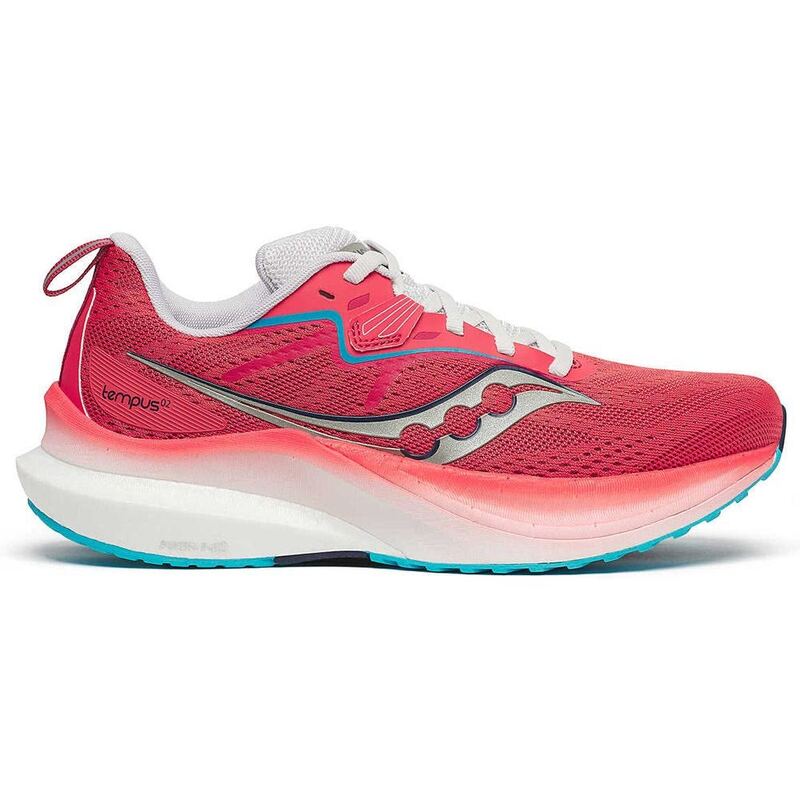
The Saucony Hurricane 25 delivers better energy return than the Brooks Adrenaline GTS 25 and provides more stability than the Hoka Arahi 8, but it's heavier and less breathable than the Saucony Tempus 2. Compared to the ASICS GT-2000 14, it offers a more responsive ride but less consistent support.
Rating sources
Our 4.3 score is the average of the 4 scored reviews above; 1 more reviewed it without printing a score and is not in the average. More about methodology.